Receptor RCH/SLR-F
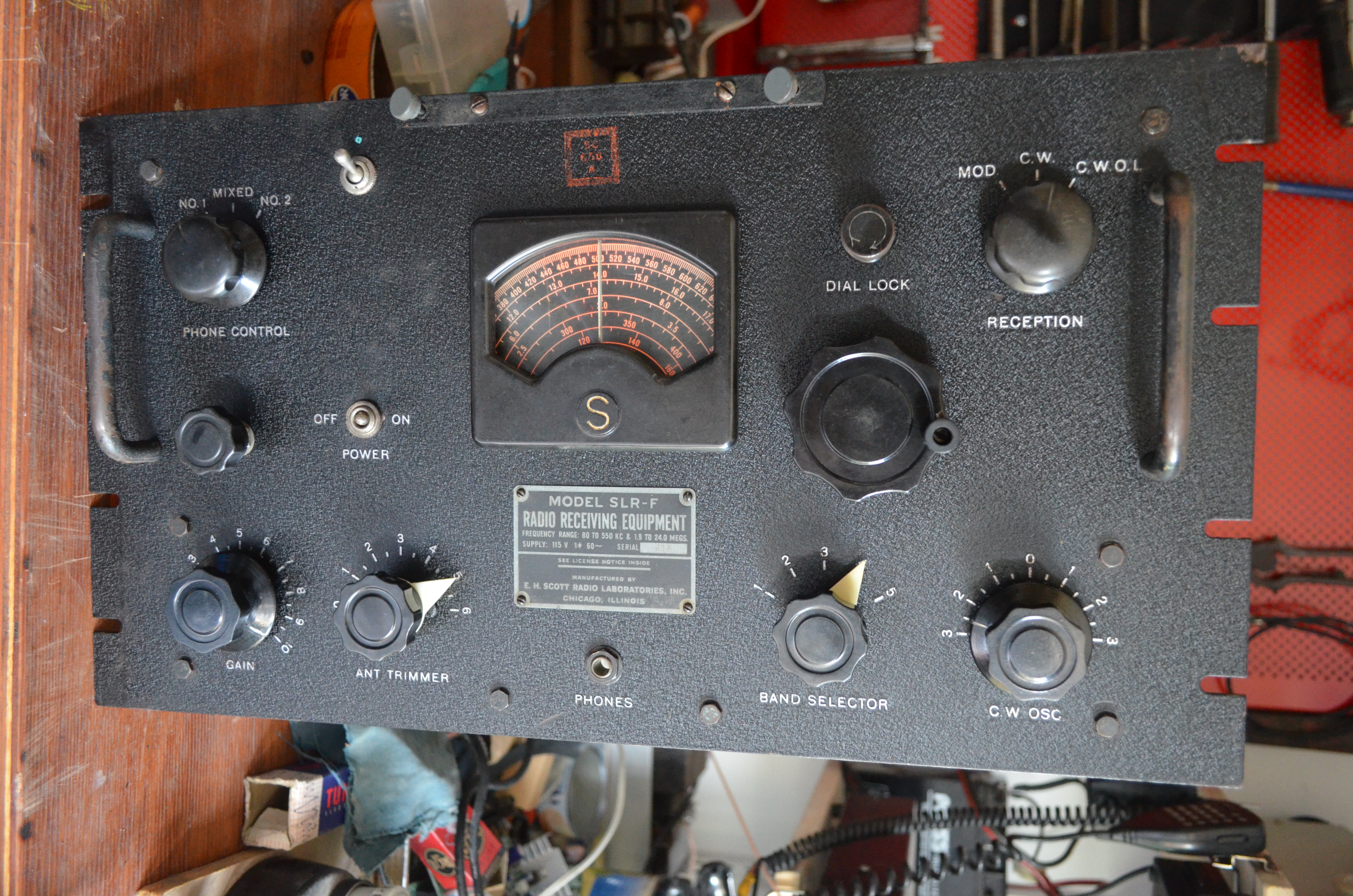
E. H. Scott Model SLR-F
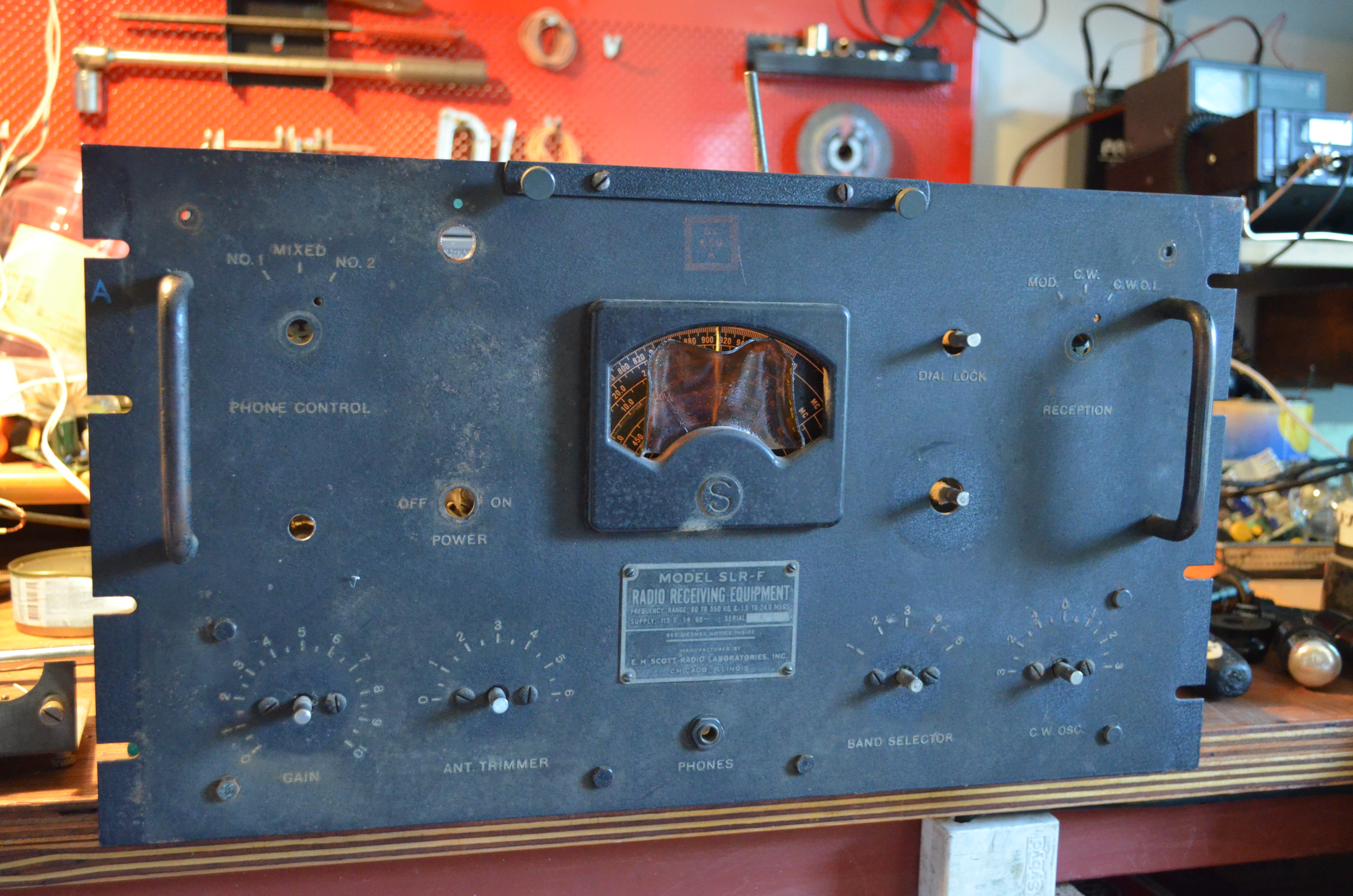
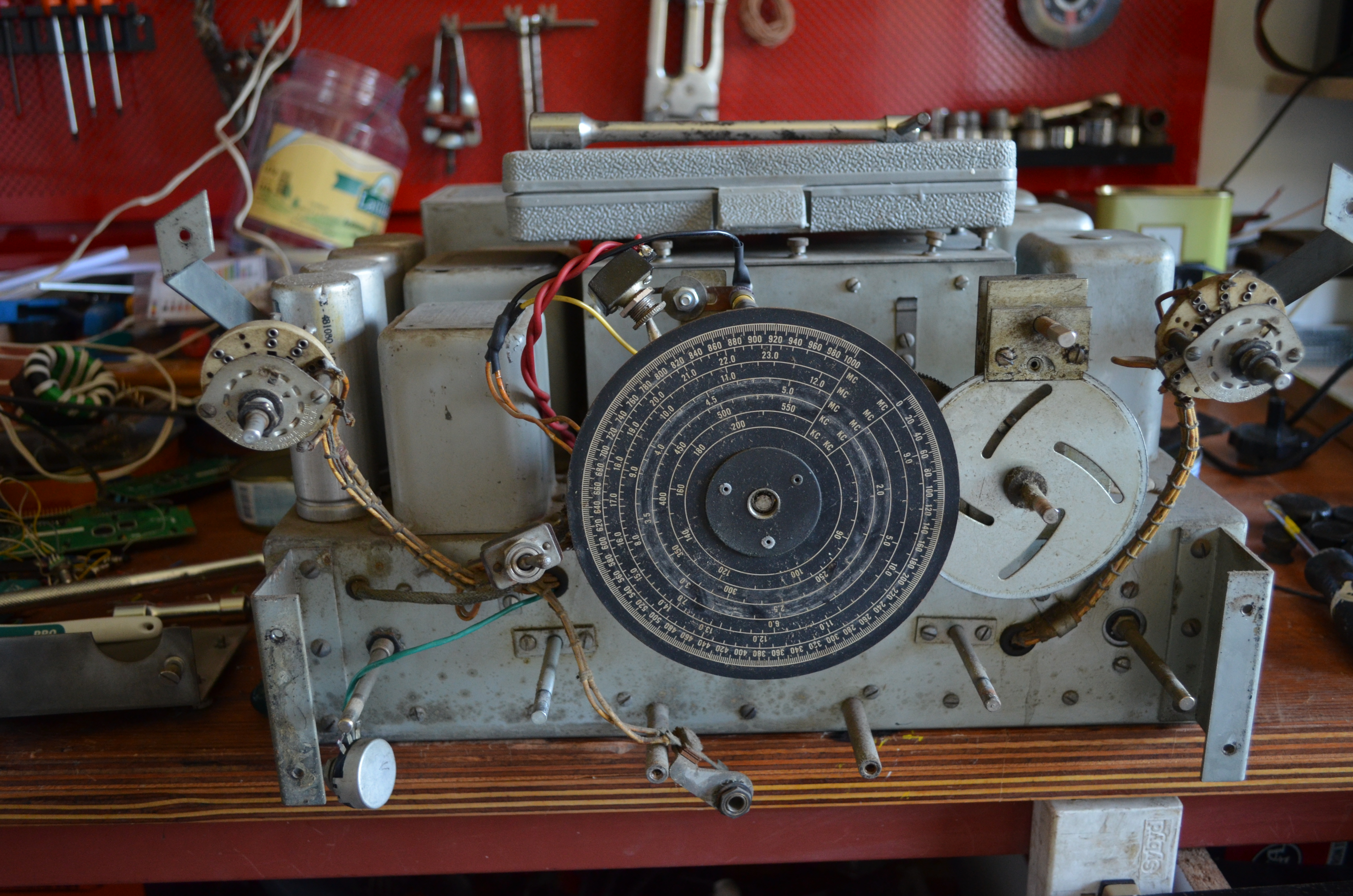
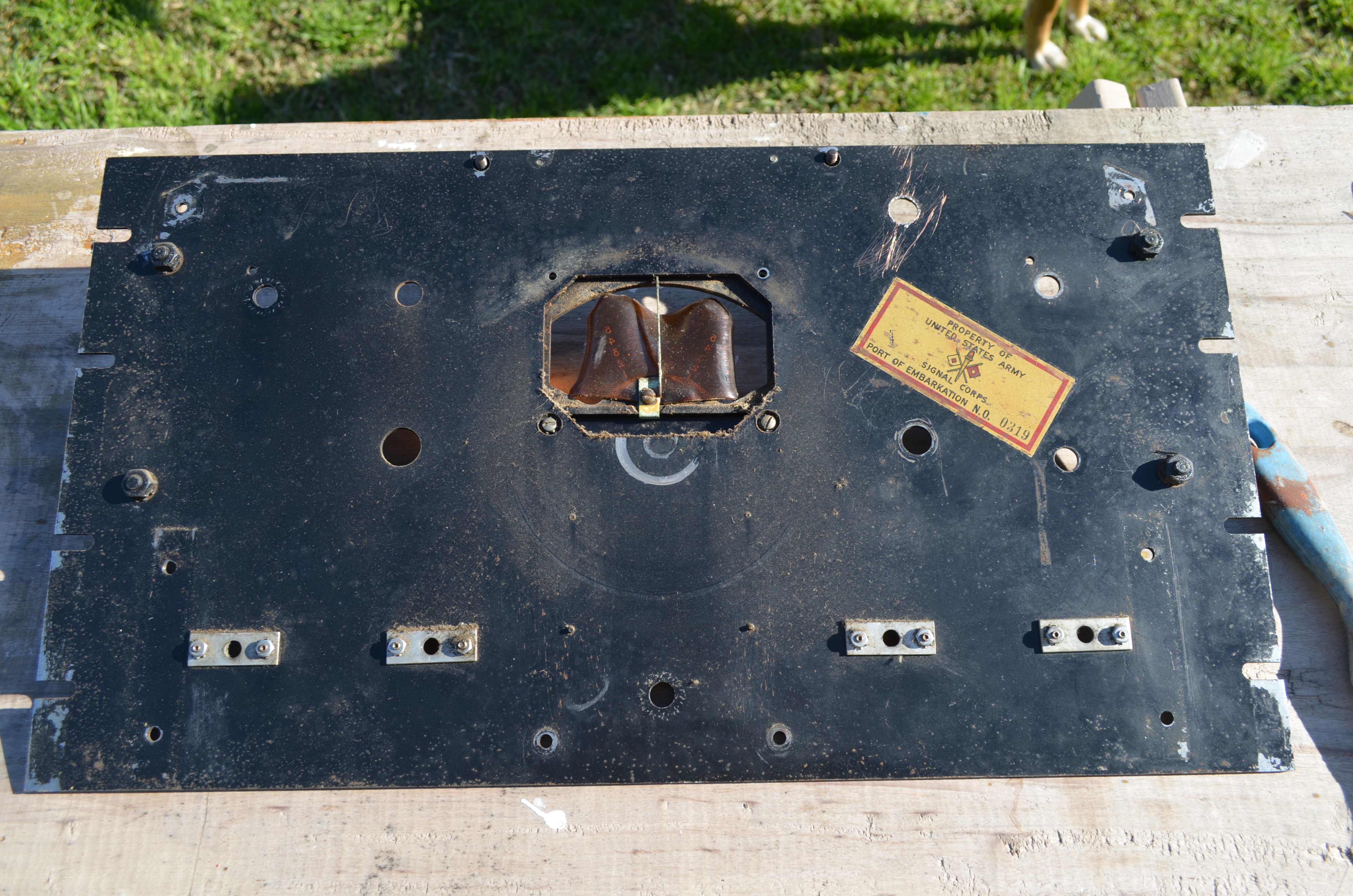
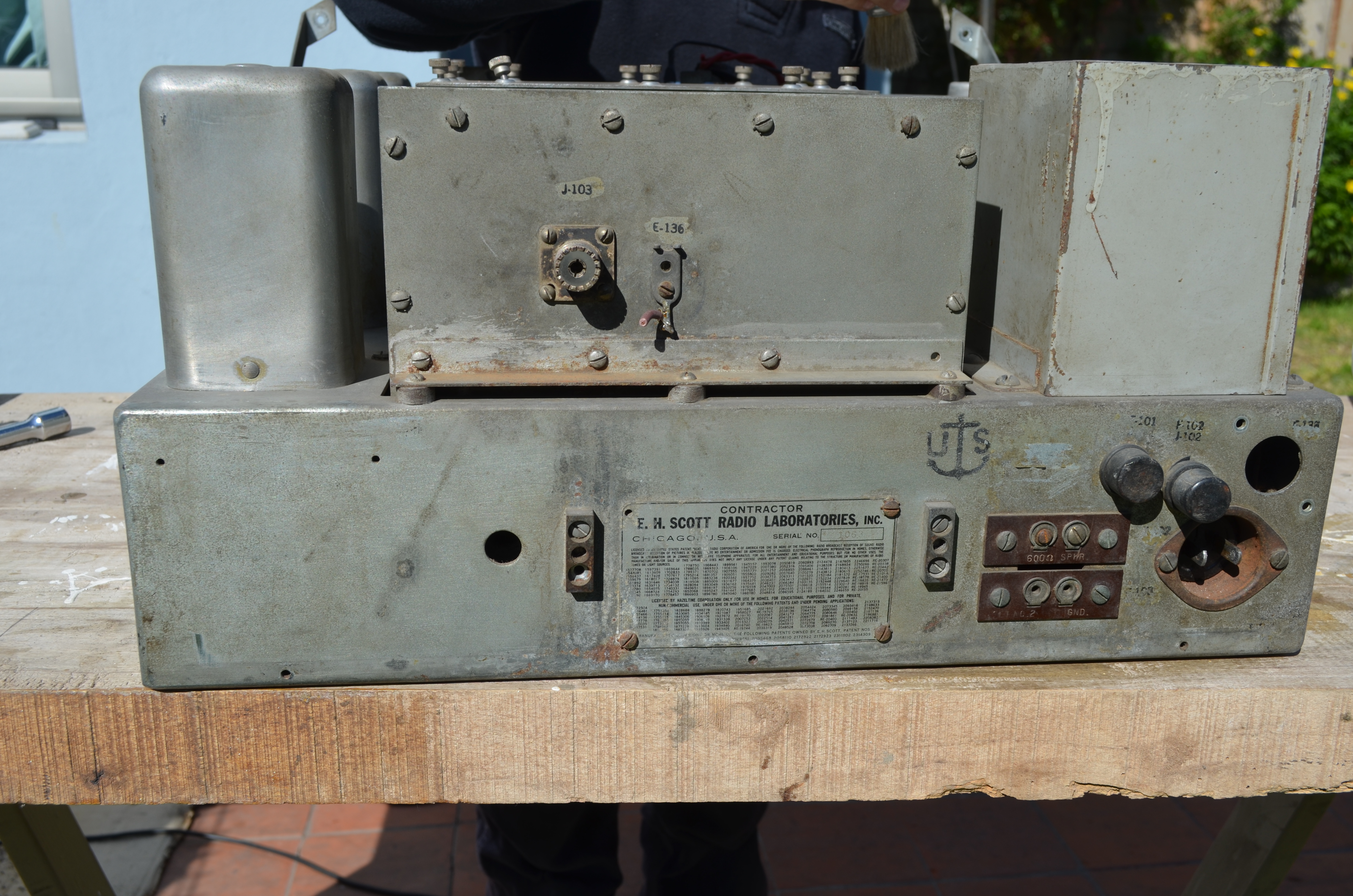
Receiver similar to the RCH but military version. I understand these receivers were used more by the merchant marine than by the military. The chassis has a navy seal on the back, so I don’t know what it was used for.
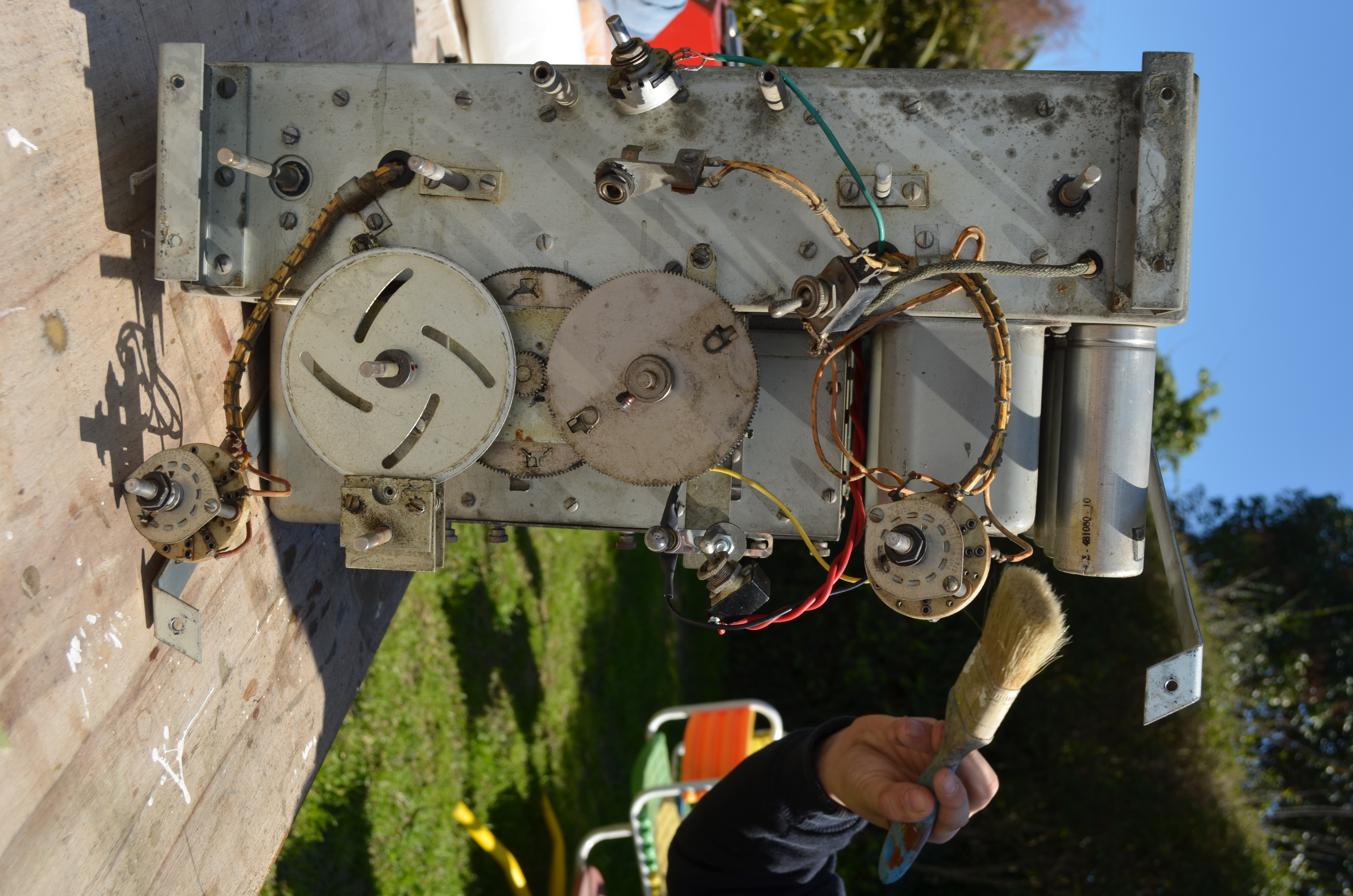
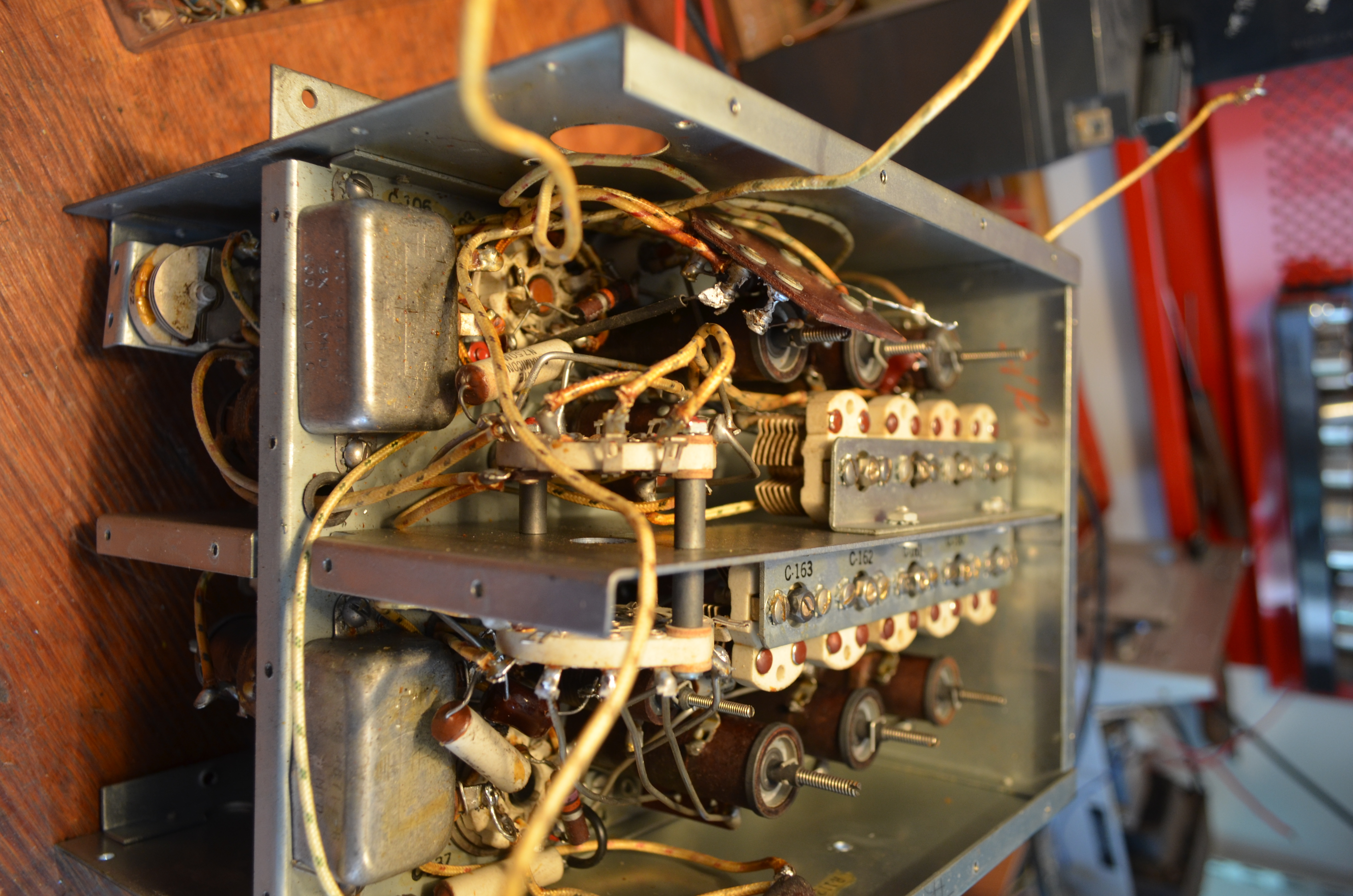
Quite heavy (~35kg) with internal power supply; I have it with its table cabinet, which weighs another 7-8kg. The construction is solid. The amount of shielding and sheet metal thickness contribute a good part of the weight.
Bands:
- 80-220 kHz
- 210-560 kHz
- 1.9-5.1 MHz
- 4.5-12.0 Mhz
- 8.8-24.0 Mhz
IF:
- 585 kHz
Tubes:
| Function | Type |
|---|---|
| RF amp | 6K7 |
| Oscillator | 6J5GT |
| Mixer | 6SA7 |
| IF (2) | 6SK7GT |
| BFO | 6SJ7 |
| Detector | 6H6GT |
| Audio | 6V6GT |
| Rectifier | 5Y3GT |
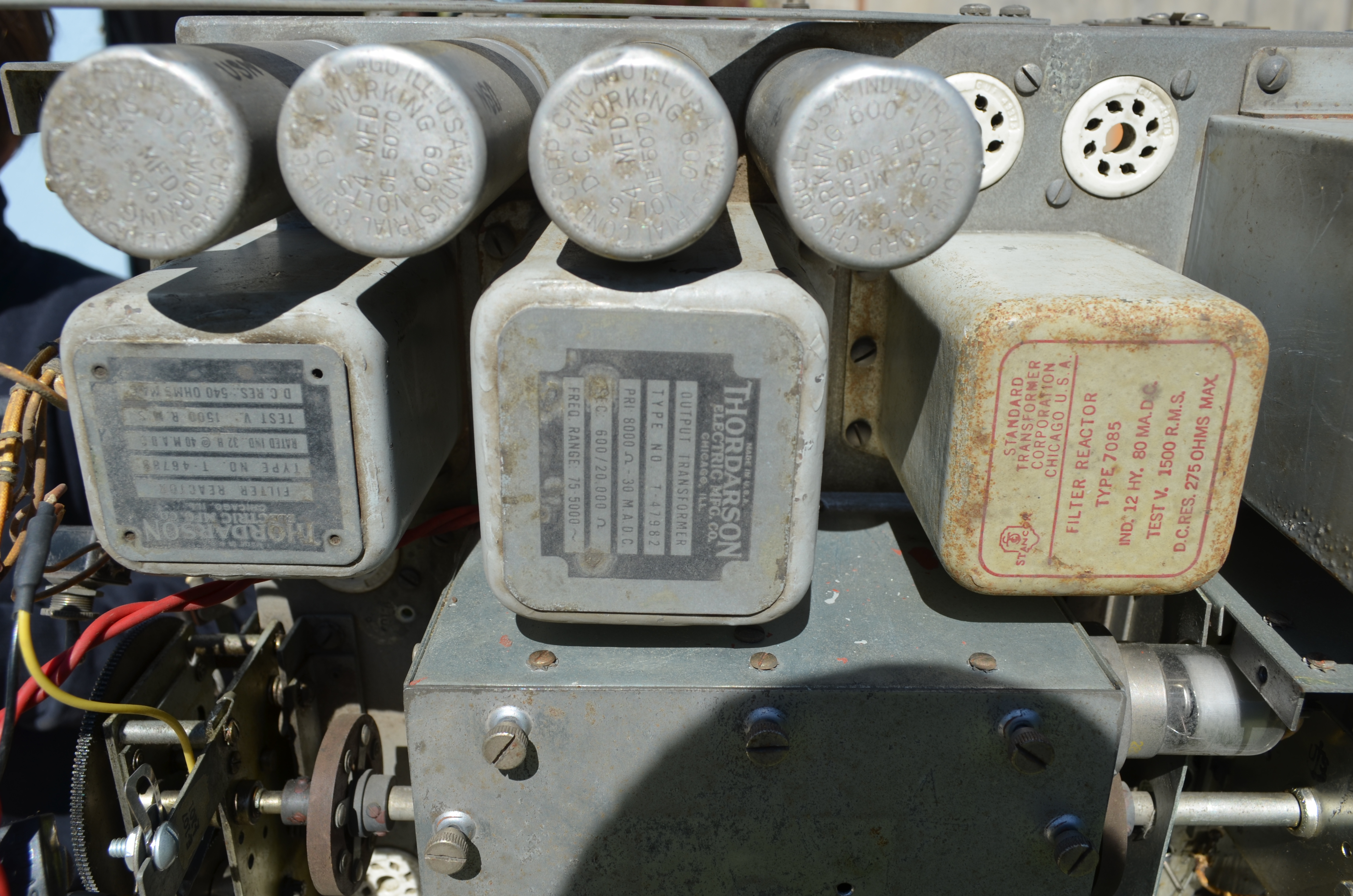
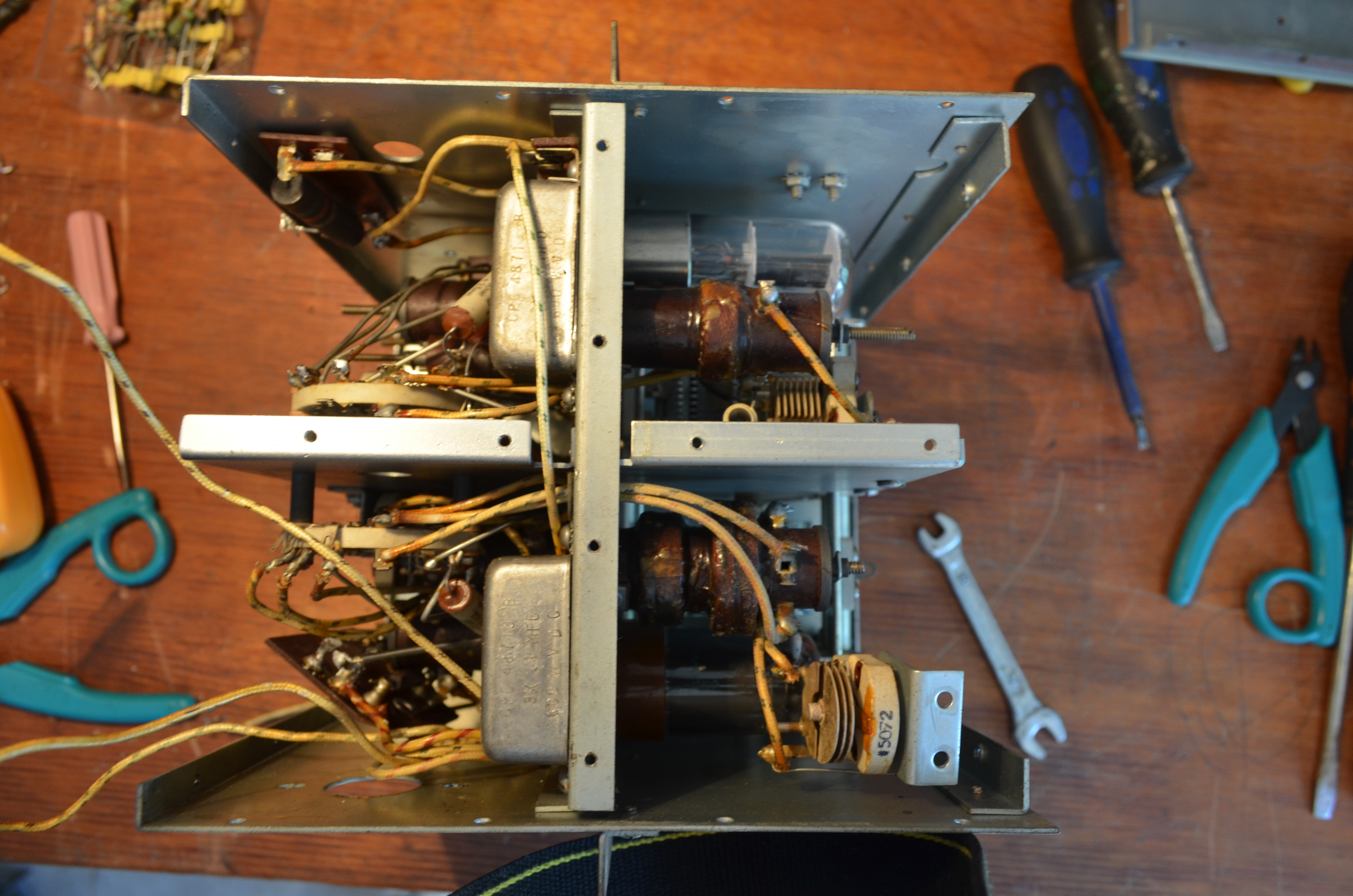
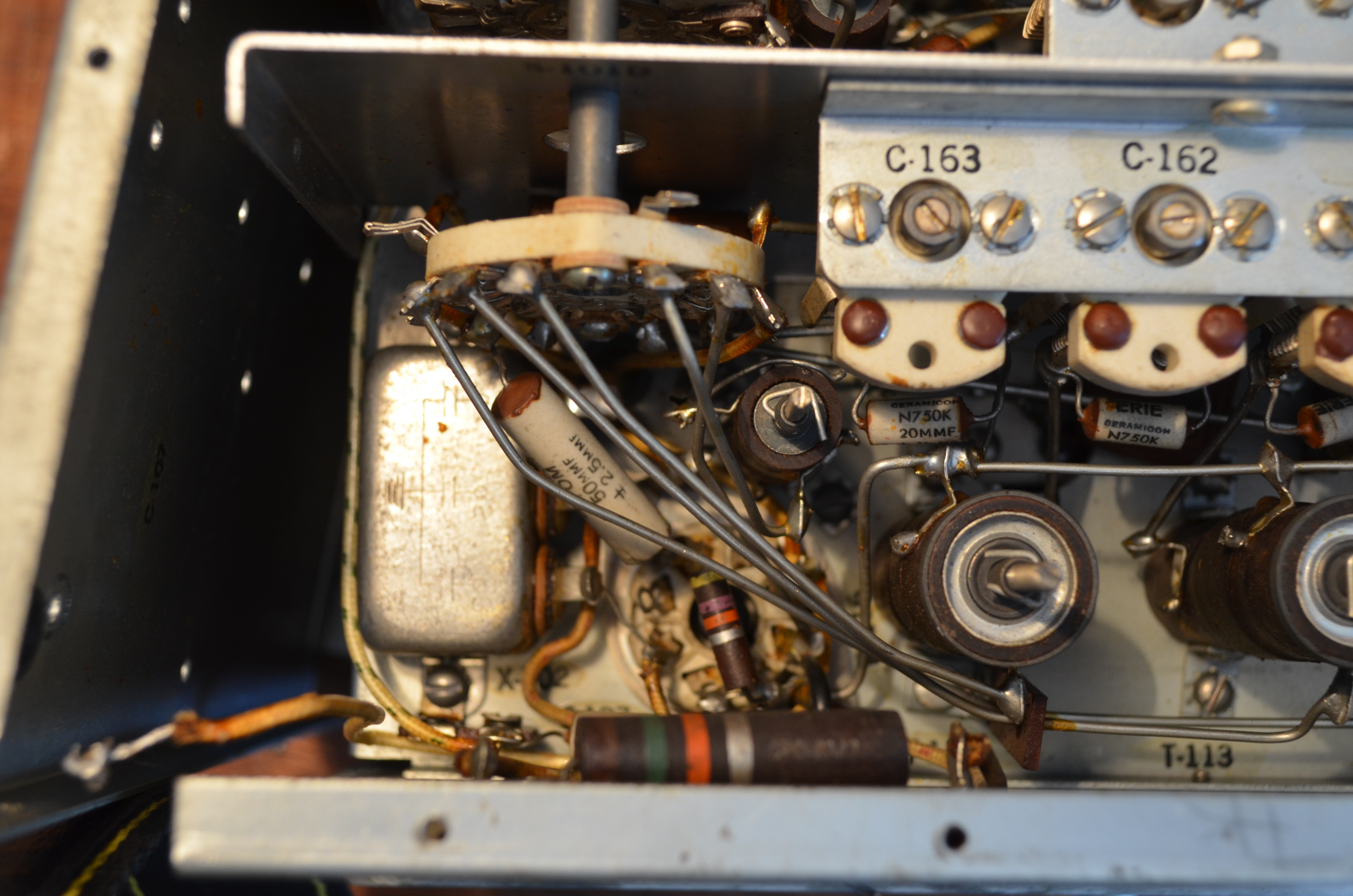
It’s full of batthub capacitors, several had leakage, had to disassemble.
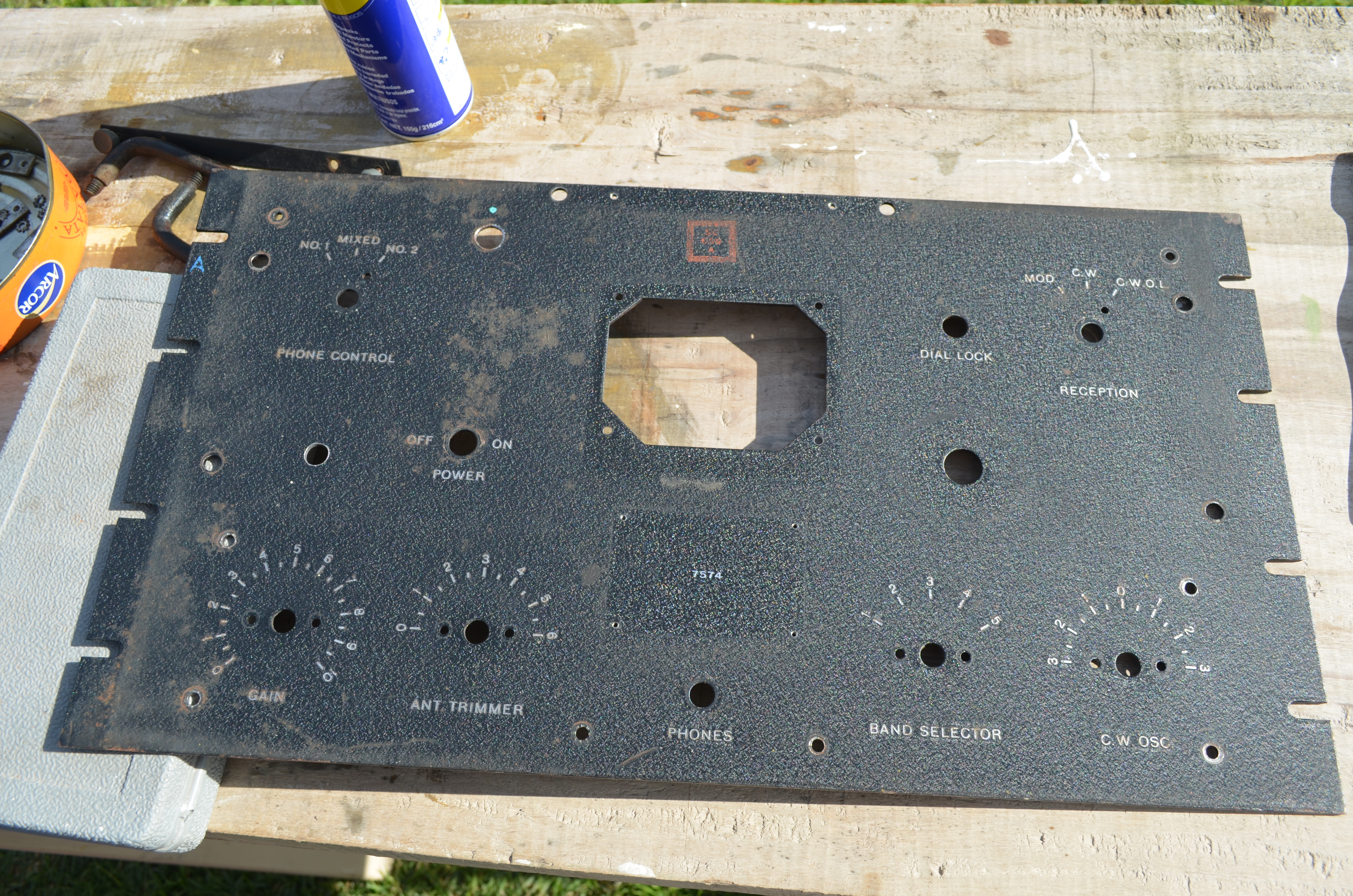
The circuit uses RF and audio gain control through two tandem potentiometers. This component is virtually unobtainable, so a separate audio potentiometer was installed in an additional hole to the left of the power switch, because the original doesn’t work properly. Not elegant but effective. The additional switch on top was connected as mute to the detector. The dial celluloid didn’t survive.
The original antenna connector was balanced according to the schematic (female UG-103/U or SO-264 and male UG-102/u or PL-284) which is the connector for twinax RG-22, so the Zin should be around those 95 ohms.
The rear connector for inverter power supply is missing.
It’s 95% original.
For the era it’s a somewhat outdated design, single tuned RF stage, the IF is very wide.
According to the manual it’s specially designed to avoid LO radiation to the antenna (presumably to operate in presence of other receivers or minimize the possibility of being located by RDF).
In AM it doesn’t sound bad, tuning is fast, inadequate for CW. It has no filters or bandwidth control of any kind.
I have the original paper manual.